Showing posts with label duiker. Show all posts

Wednesday, November 6, 2019

Trotters ID workflow

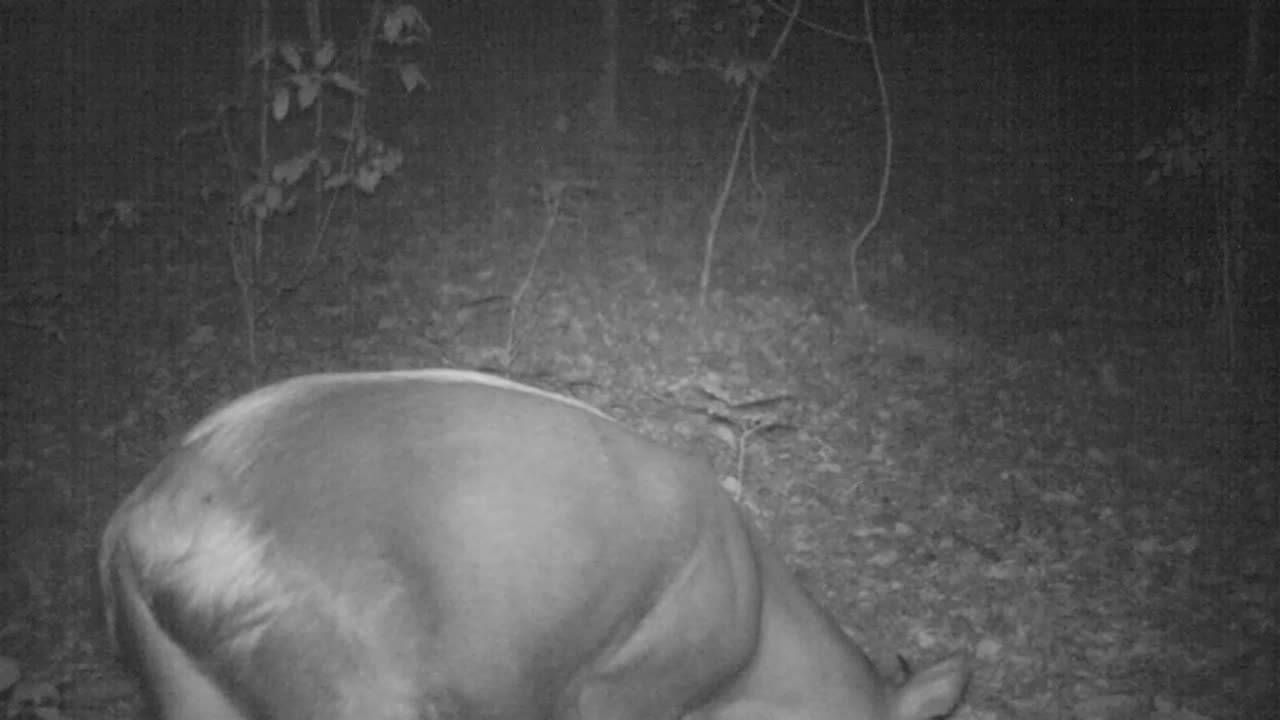
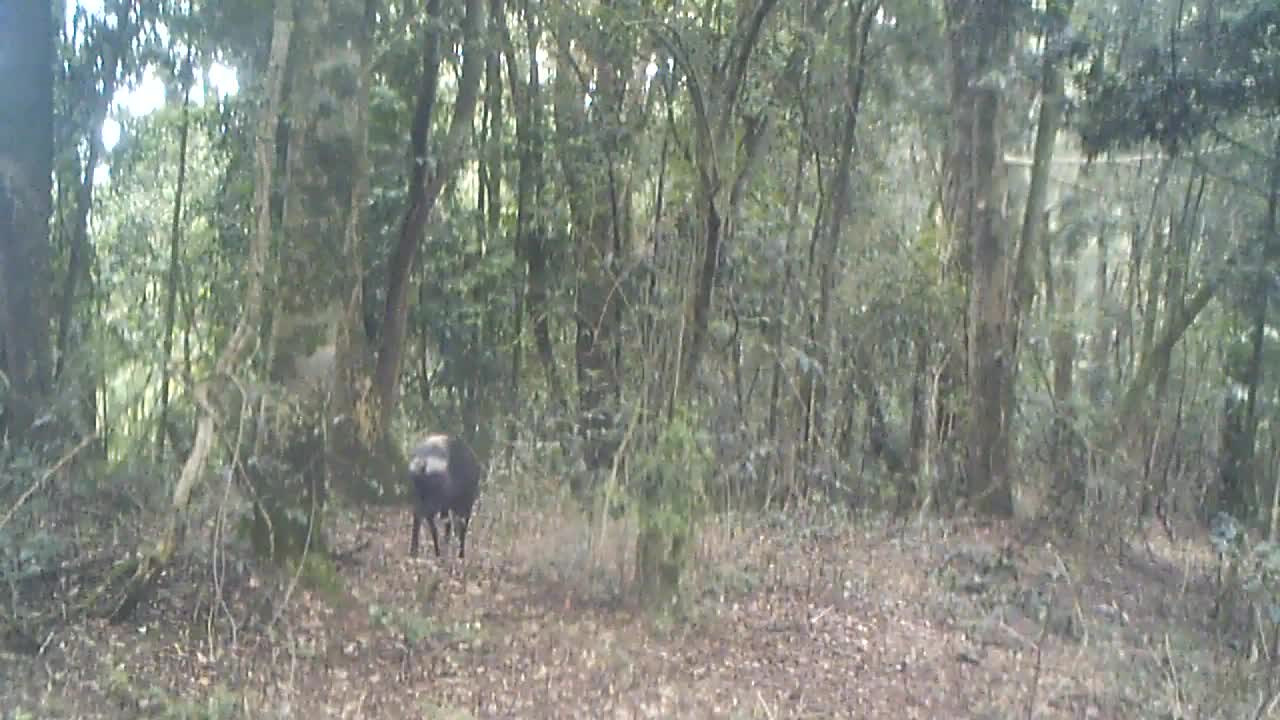
Today we are opening the Xenon Bloom trotters workflow at www.chimpandsee.org. Help us identify hoofed and cloven-footed creatures like ungulates, duikers and hogs at the species level! The tutorial acts as a mini field guide to help you identify the species if you're a beginner or an experienced annotator that needs a bit of help 😊

You'll find the trottersID workflow on our start page under the main photo. Enjoy!

Tuesday, October 18, 2016

Yellow-backed Duikers

If you've classified much at Restless Star, one of our current sites, you've probably seen a lot of yellow-backed duikers.  They may not always make for the most captivating videos, but for this post, I wanted to talk a bit about what makes yellow-backed duikers interesting.

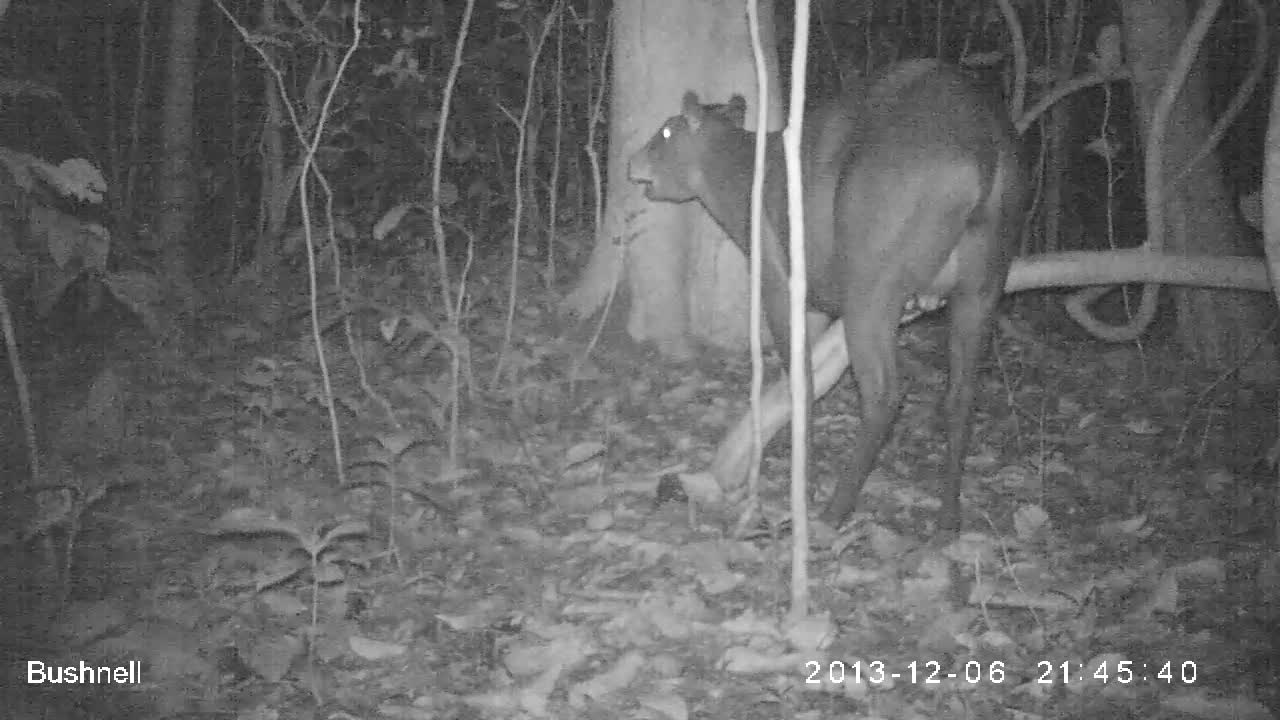
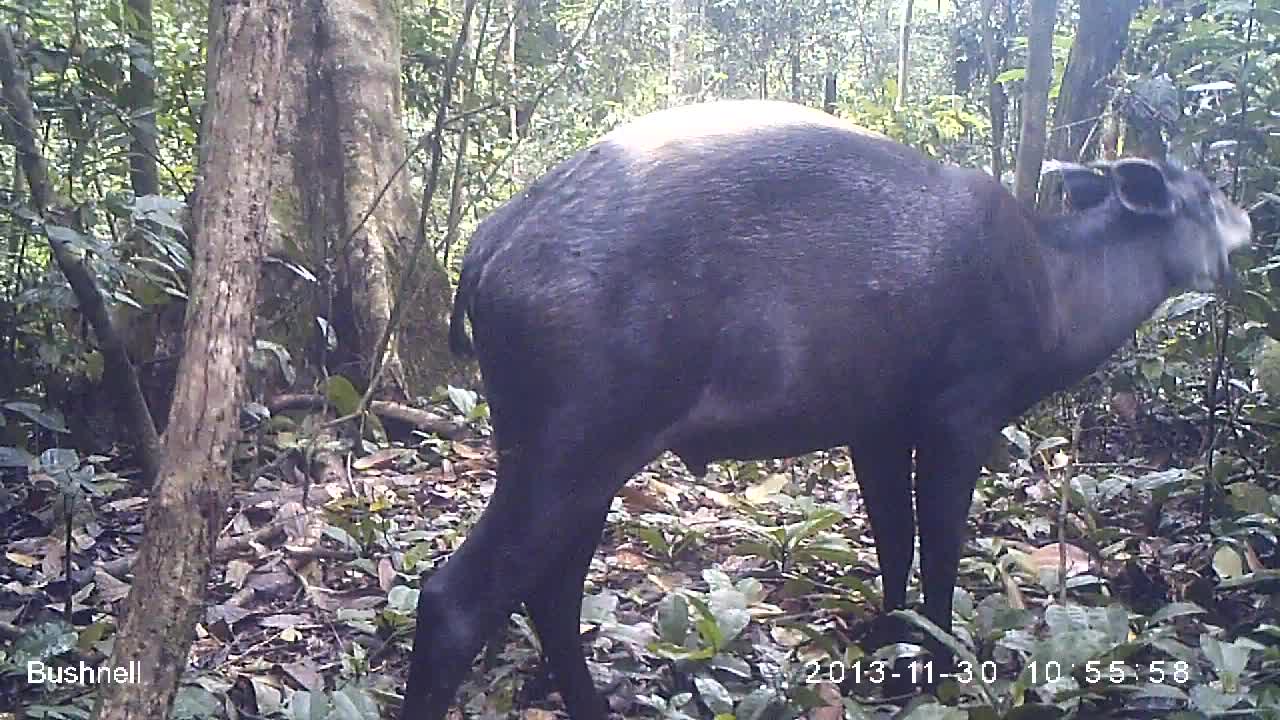
First off, yellow-backed duikers have the widest distribution of any forest-living duikers, and they're the only duiker species we've seen at both West Africa sites (e.g. Aged Violet) and East Africa sites (e.g. Restless Star).  They are one of the two largest duiker species (the other being the Jentink's duiker) and can weigh over 70 kg, with horns over 20 cm long.  Body size varies somewhat by subspecies, with the Restless Star individuals belonging to the smallest subspecies.  The most variable feature across their range, though, is the presence or absence of a "haunch spot".  In West Africa, yellow-backed duikers have a large yellow triangle of fur extending back to around their hips, and the fur on their rear is a solid dark color, however in East Africa, they have an additional pale area of fur on their rear.  Next time you come across a yellow-backed duiker in a video, see if you can guess which site the video is from based on the color of the rear!

West Africa


East Africa

(Still images from ACP0002zbs ACP00035yv ACP000clru ACP000bygc)


The last (and maybe most amazing) feature of yellow-backed duikers that I'm going to talk about is their ability to raise the yellow fur on their back.  Normally the yellow fur lies flat on the back as they amble around or rest, but when they are startled or on alert, they can make the fur stick straight up, completely changing the outline of their body!  Have a look in the video below.


(Original video here ACP000cc29)

Hopefully you have a new-found appreciation for yellow-backed duikers after this post!  See you soon over at Chimp & See, where we have plenty of yellow-backed duikers and other animals for you to watch!

Source: Kingdon, Jonathan, et al. Mammals of Africa. Vol. 6. A&C Black, 2013.

Sunday, February 14, 2016

Happy Valentine's Day!

Long-time Chimp & See participants will know that we have seen a LOT of duikers on the camera trap videos.  Bush duikers, bay duikersJentink's duikers, zebra duikers, black duikers, yellow-backed duikers -- the list just keeps going!  Sometimes it can feel like they're all basically the same animal in a larger/smaller/differently colored package.  But one noticeable difference -- and the reason for this Valentine's themed blog post -- is that Maxwell's duikers and blue duikers (two closely related species together classified as "small grey duikers" on C&S) have strong pair bonds and are often seen together in mated pairs on video, unlike our other duiker species.  One previous study found 75% of adult male blue duikers and 77% of adult females lived in a couple (none lived in a group other than a pair, the rest were all solitary).  As many of you probably know, part of living in a couple is maintaining the relationship, and we've seen blue and Maxwell's duikers doing this in a couple ways: they press the scent glands on their faces together, looking a bit like a double-cheek kiss, and they groom each other by licking.

For your Valentine's Day enjoyment, here are some short clips of duikers interacting:


Thanks to C&S participants for tagging these clips!  If you'd like to see the full videos, they're located herehereherehere, and here.

Hope you have a great Valentine's Day, and we look forward to seeing you at Chimp & See!


References:
Kingdon, Jonathan, et al. Mammals of Africa. Vol. 6. A&C Black, 2013.
Estes, Richard. The behavior guide to African mammals. Vol. 64. Berkeley: University of California Press, 1991.

Wednesday, December 23, 2015

DailyZoo mongoose vs duiker - last day for 2015 best video nominations!

Last day to nominate your favourite chimpandsee.org videos of 2015 here: http://talk.chimpandsee.org/#/boards/BCP000000c/discussions/DCP0000lrf

Like in this mongoose versus duiker clip - who will prevail? ;)


Your chimp&see moderators will be collecting the nomination videos starting tomorrow and final voting will soon follow!

original video here:http://talk.chimpandsee.org/#/subjects/ACP0005bwu

Monday, December 14, 2015

Thursday, October 22, 2015

Halloween countdown from Chimp&See!

For the next 10 days we'll been showcasing some of Chimp&See's spookiest videos on facebook and twitter filled with things that go bump in the night (and sometimes during the day too)! Check back here daily to see what makes our top 10 list!

10) Chimp&See's Spooky Rompo 

We started the countdown with this video from Crimson Dew that sets the tone perfectly and was found by modertaor jwidness. Its just an illusion created by a foggy and wet camera lens (or is it?!? muahhahahahahahah!) or perhaps the legendary Rompo?


original video can be found here: http://talk.chimpandsee.org/#/subjects/ACP00052tm1


9) Spiders
We've got some great spider videos on Chimp&See, sometimes they can even be a bit distracting! Citzien scientist Boleyn commented that "because of the #spider I almost missed the #genet" on this video from Muddy frost: http://talk.chimpandsee.org/#/subjects/ACP0003qe1 


Also, we suspect that these floaty orbs found by StarwatcherHB and Zanna640 are actually out of focus spiders near the camera lens at Dry Lake but secretly we hope they are benevolent forest spirits like the Kodama or Yumboeshttp://talk.chimpandsee.org/#/subjects/ACP0006w71 

Here are a few more spider videos to make your skin crawl:

8) Elephantom
Citizen scientist moderator ksigler noted that these elephants seems to appear out of nowhere at Cool Silence. It's amazing how in all of our videos these massive beasts seem to be so unobtrusive in the forest, ghost-like one might say.
http://talk.chimpandsee.org/#/subjects/ACP0002p15 


7) Attack of the not so killer bees
Citizen scientist Eswiniarski is pretty sure that this guinea baboon was stung by a bee in this video from Dry Lake. Luckily he seems to have made a quick recovery.


originals here: http://talk.chimpandsee.org/#/subjects/ACP000726c and http://talk.chimpandsee.org/#/subjects/ACP000726d 


6) Ghost & Pirate Chimps 
Night mode on our camera traps sometimes makes the chimps look extra ghostly on the videos. Citizen scientist MargC found that our ginger chimp from Dry Lake named Roux looks especially pale in black and white (http://talk.chimpandsee.org/#/subjects/ACP0006ovo and you can see more videos of Roux here: http://talk.chimpandsee.org/#/collections/CCPL0000fm)


While matching chimps, we rely on special features that distinguish each chimp from one another.The night videos are often tricky for this purpose since many of the features get washed out in low light. Citizen scientists Eswiniarski and AnLand noticed however that this male chimp from Lingering Shape has a special feature that is probably only seen at night: a right eye that does not reflect any light. 
(original videos: http://talk.chimpandsee.org/#/subjects/ACP0005mzg and http://talk.chimpandsee.org/#/subjects/ACP0005mz8)


5) Fires of Samhain
Before Halloween was Halloween, it was Samhain. And a big part of Samhain is fire. "It is suggested that the fires were a kind of imitative or sympathetic magic – they mimicked the Sun, helping the "powers of growth" and holding back the decay and darkness of winter. They may also have served to symbolically "burn up and destroy all harmful influences".Accounts from the 18th and 19th centuries suggest that the fires (as well as their smoke and ashes) were deemed to have protective and cleansing powers".

We have a lot of fires at our current site Dry Lake and they burn during the day and night. Some are natural due to the dryness of the site and some are set by people for agricultural purposes.


How do chimpanzees react to fire you ask? Check out this paper by Pruetz and LaDuke "Reaction to fire by savanna chimpanzees (Pan troglodytes verus) at Fongoli, Senegal: Conceptualization of "fire behavior" and the case for a chimpanzee model."


Thanks to citizen scientists starwatcherHBMorra and clt21duke for highlighting these great clips (http://talk.chimpandsee.org/#/subjects/ACP0006r5w , http://talk.chimpandsee.org/#/subjects/ACP00075a6 , http://talk.chimpandsee.org/#/subjects/ACP0006ob4)


4) The forests have eyes (and they are adorable, I mean spooky)


Thanks to citizen scientists jwidness and snorticus for finding these great clips from Red Water and Dry Lake! (http://talk.chimpandsee.org/#/subjects/ACP0003a1x , http://talk.chimpandsee.org/#/subjects/ACP0007ape)


3) Halloween photobomb
Ever get that feeling that there is sssssssssssome body behind you? Citizen Scientist rlb66xyz 6 noticed that this Cool Silence duiker is being seriously photobombed by a snake slithering towards it in the lower right part of the video right above the duiker's head. Sssssssssssssneaky!


(original video: http://talk.chimpandsee.org/#/subjects/ACP0002nqg


2) Going batty
You wouldn't guess that we'd get a lot of bats on our camera traps - but we do! In this clip from Quiet Wood citizen scientist markehurd saw something a bit batty in this red river hog video clip


(original video here: http://talk.chimpandsee.org/#/subjects/ACP00004ei)

And If you want to check out more bat videos visit our bat tag group: http://talk.chimpandsee.org/#/collections/CCPL00000l


1) A potto, a galago and the legend of the egbere
We did not expect to see the more elusive smaller primates like galagos (bushbabies) and pottos in our video footage. But our amazing, observant and patient citizen scientists managed to find both! We end our Halloween countdown with this legend from Nigeria about bushbabies.
Bushbabies in the Yoruba language are called 'egbere' and their legend has been passed from generation to generation. The egbere are little, supernatural human like creatures(or spirits) that wonder through the forest carrying a mat (their tail) and lamp (their eyes). Their unique cry sounds like that of a child or little baby which lures humans to them at night.According to popular folklore, bushbabies are usually encountered by hunters deep in the forests. It is said that anyone who is able to steal an egbere's mat will become rich. But, the person has to withstand 7 days of tribulation caused by the creature who wants its property back and the hunter must not lose site of the mat during this time. During those days, the person will not be able to sleep because of the creature's incessant cries which only he can hear. If the person gives up within the 7 days, the Bush Baby will kill them, the fate that awaits most people who try to steal the egbere's mat!
adapted from http://www.mojidelano.com/2013/11/when-folklore-meets-reality-bush-baby.html and http://knowalotmore.blogspot.de/2012/12/top-5-scariest-nigerian-spirit-creatures.html


Click here to see all our galago videos: http://talk.chimpandsee.org/#/collections/CCPL00009e
and potto videos: http://talk.chimpandsee.org/#/collections/CCPL0000h3

We hope you enjoyed our 10 day countdown and we wish you a very Happy Halloween from Chimp&See!