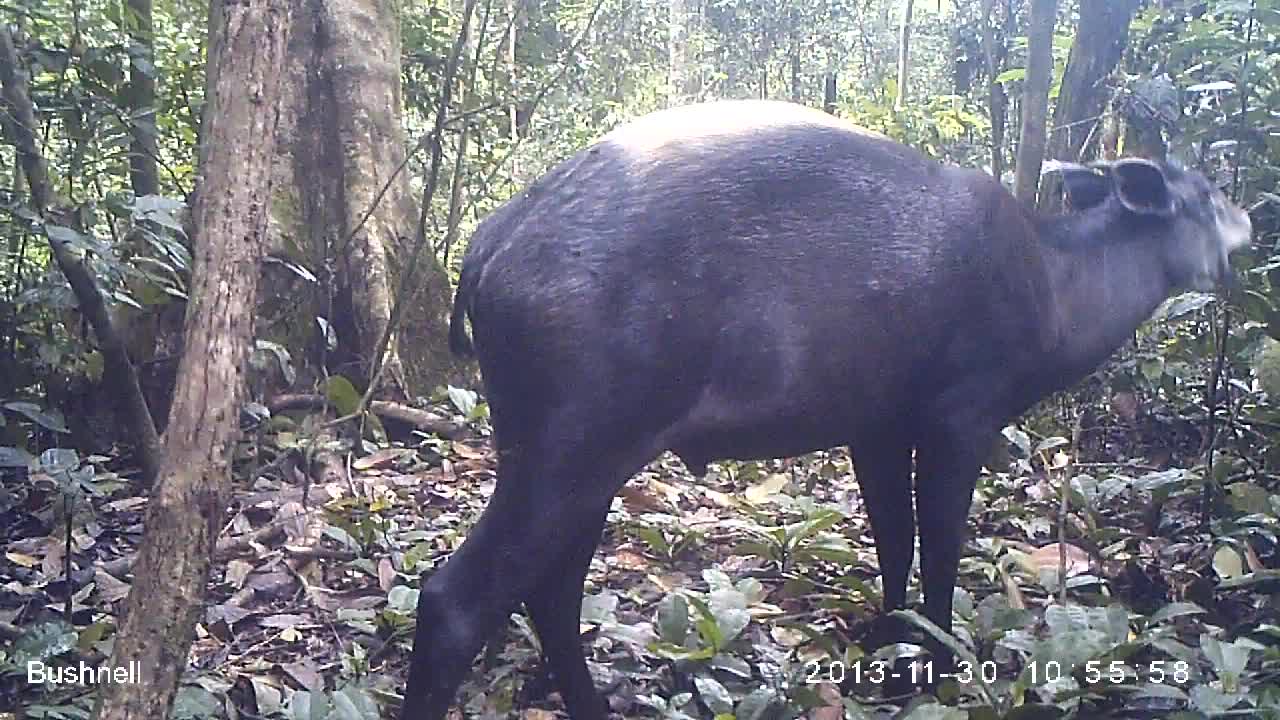
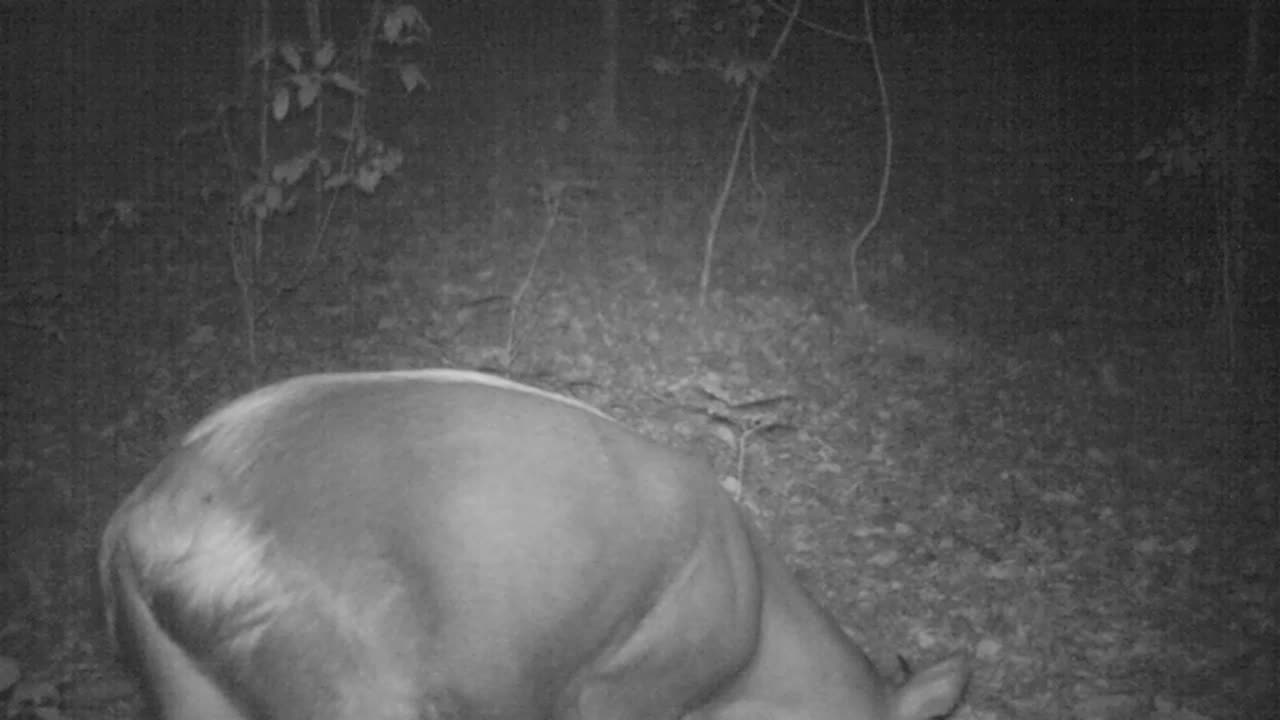
In my previous blog post, I talked a bit about the rear ends of yellow-backed duikers. Today I wanted to mention hippo rears -- fair warning that this will be about male parts, so if that's not your thing, maybe you'd like to look at some Chimp&See videos in classification instead.
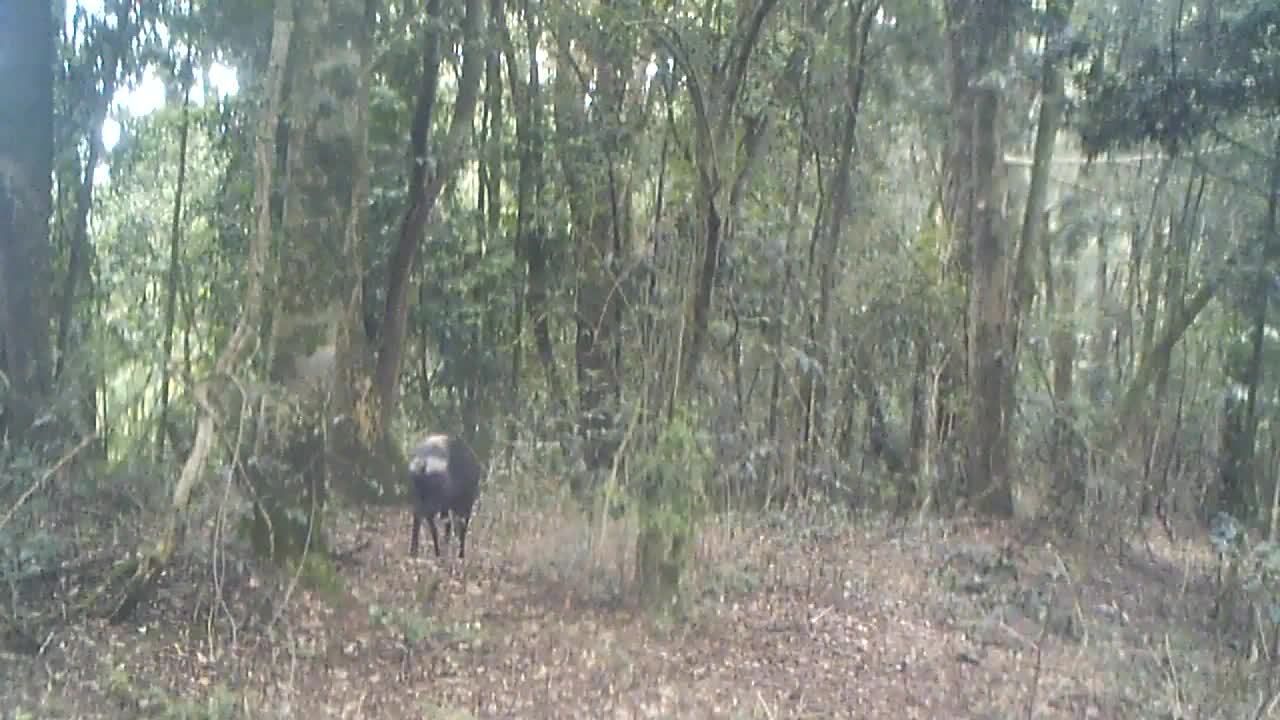
Most male hoofed mammals have testes that are located in a scrotum outside the core of the body. There are just a few exceptions: rhinos, tapirs, and hippos. While we won't see rhinos or tapirs on Chimp&See, we have had quite a few pygmy hippo videos. Not only do these guys lack external testes, but they also have a rather unusual pendulous penis that faces backwards. Have a look at some pygmy hippos below, and next time you're on Chimp&See, try to spot more of these unique males!
Original videos at ACP00025kg, ACP0005pdy, ACP0005oii, ACP000f2zl
Sources:
Estes, R. Despard. "The behaviour guide to African mammals: including hoofed mammals, carnivores, primates." Johannesburg: Russell Friedman Books CC (1991).
Kleisner, Karel, Richard Ivell, and Jaroslav Flegr. "The evolutionary history of testicular externalization and the origin of the scrotum." Journal of biosciences 35.1 (2010): 27-37.